BFunded Journal
How early-stage rounds actually get closed
Practical writing on raising an early-stage round — investor outreach, equity crowdfunding, cap tables and what actually separates founders who close from founders who stall.
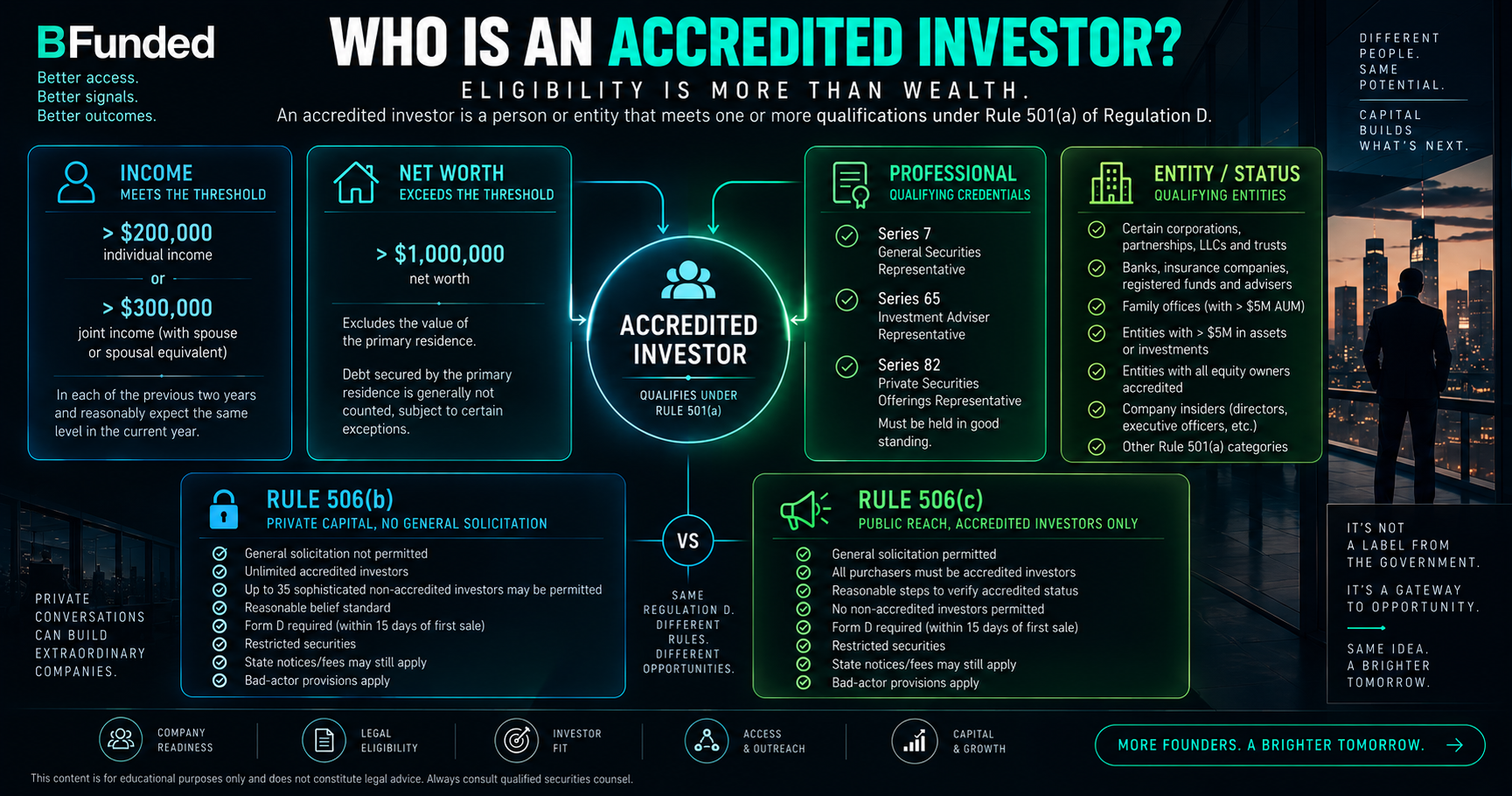
What Is an Accredited Investor? What Startup Founders Need to Know
Learn who qualifies as an accredited investor, including income, net worth, professional credentials, entity rules, and verification requirements under Regulation D.
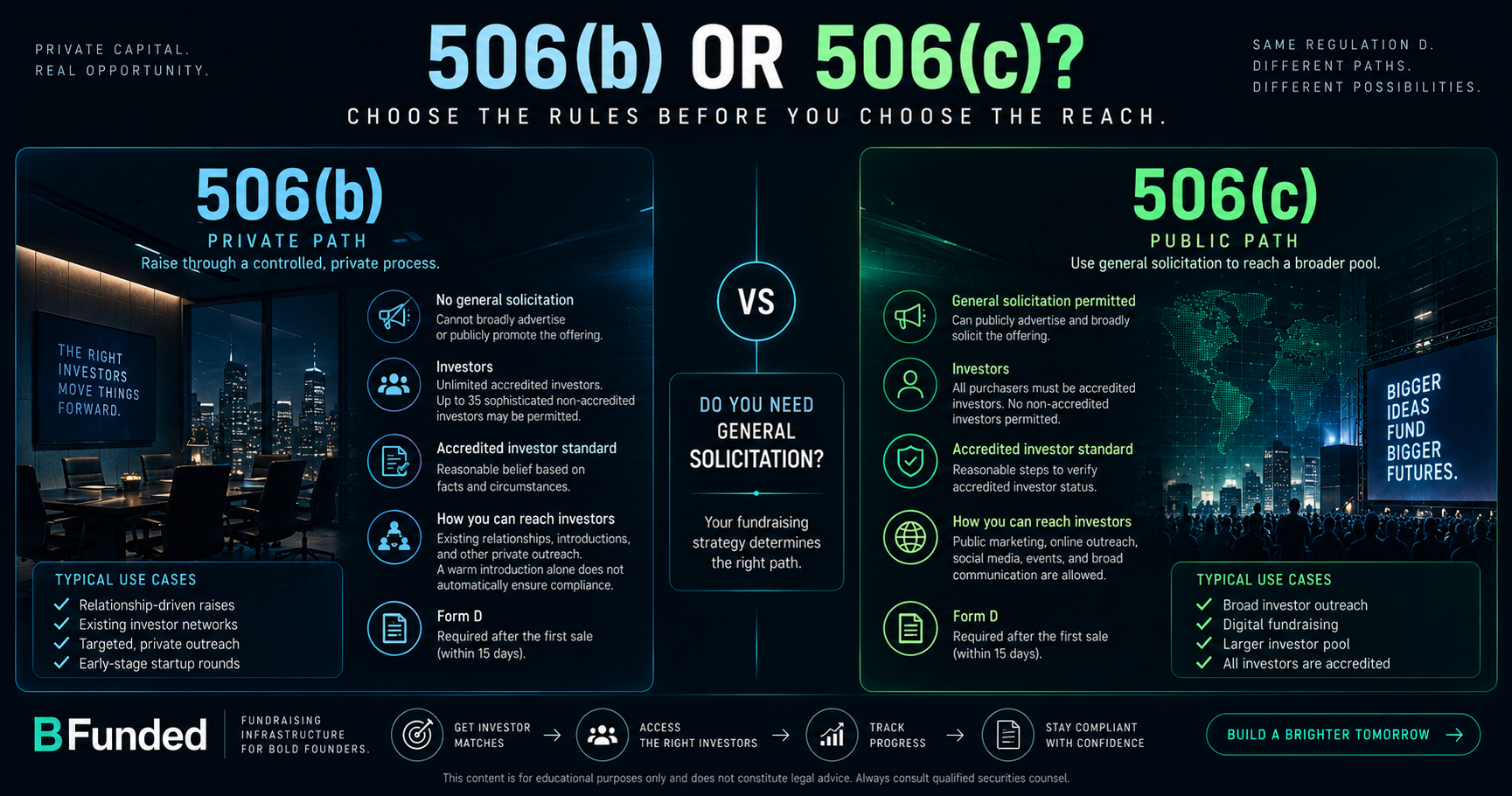
Rule 506(b) vs. 506(c): What Startup Founders Need to Know Before Raising
Learn the difference between Rule 506(b) and 506(c), including general solicitation, accredited investors, verification, Form D, and what founders should consider before raising.
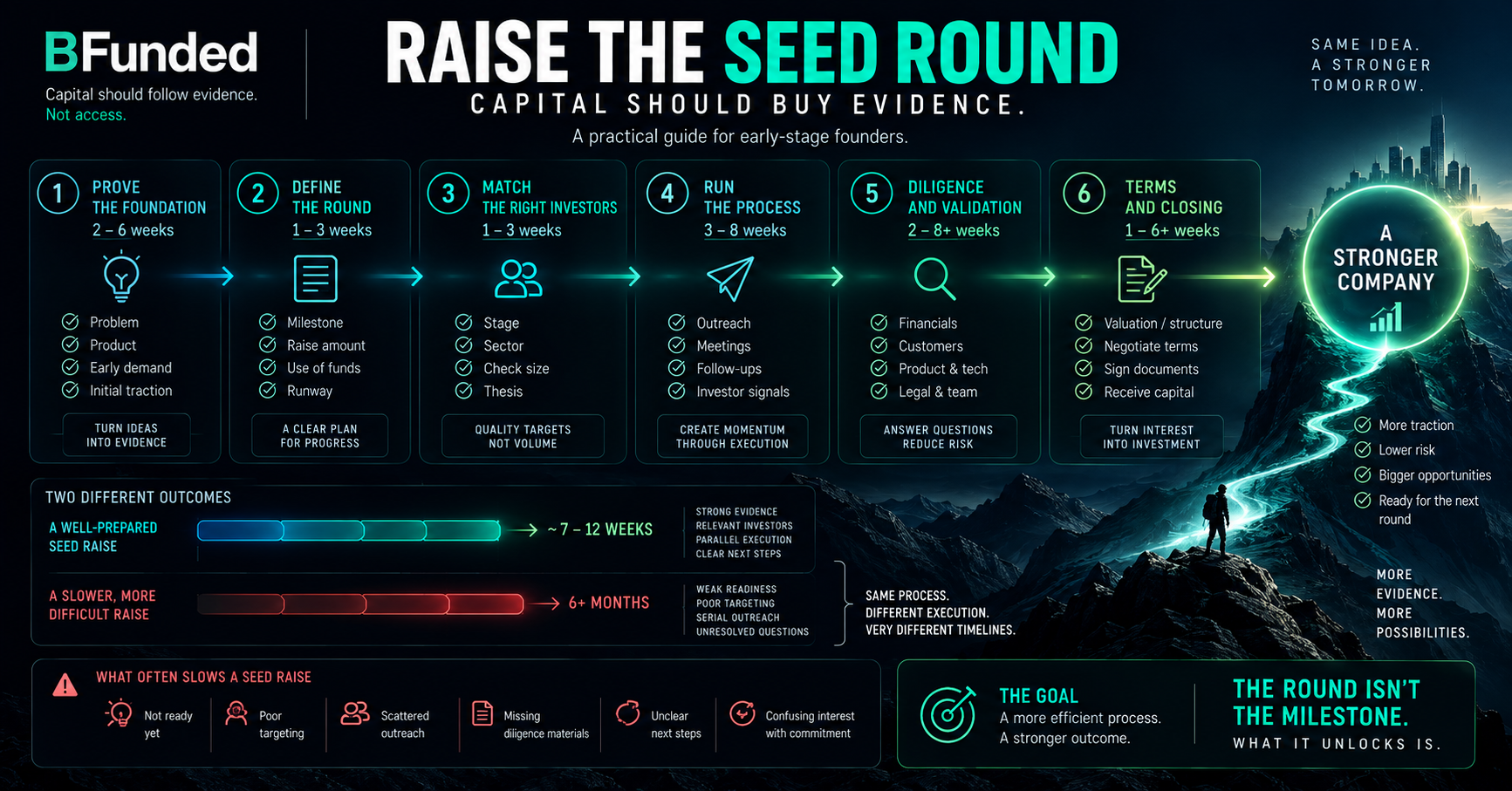
How to Raise Seed Funding: A Practical Guide for Early-Stage Founders
Learn how to raise seed funding by defining the milestone, proving readiness, targeting the right investors, running a fundraising pipeline, and closing the round.
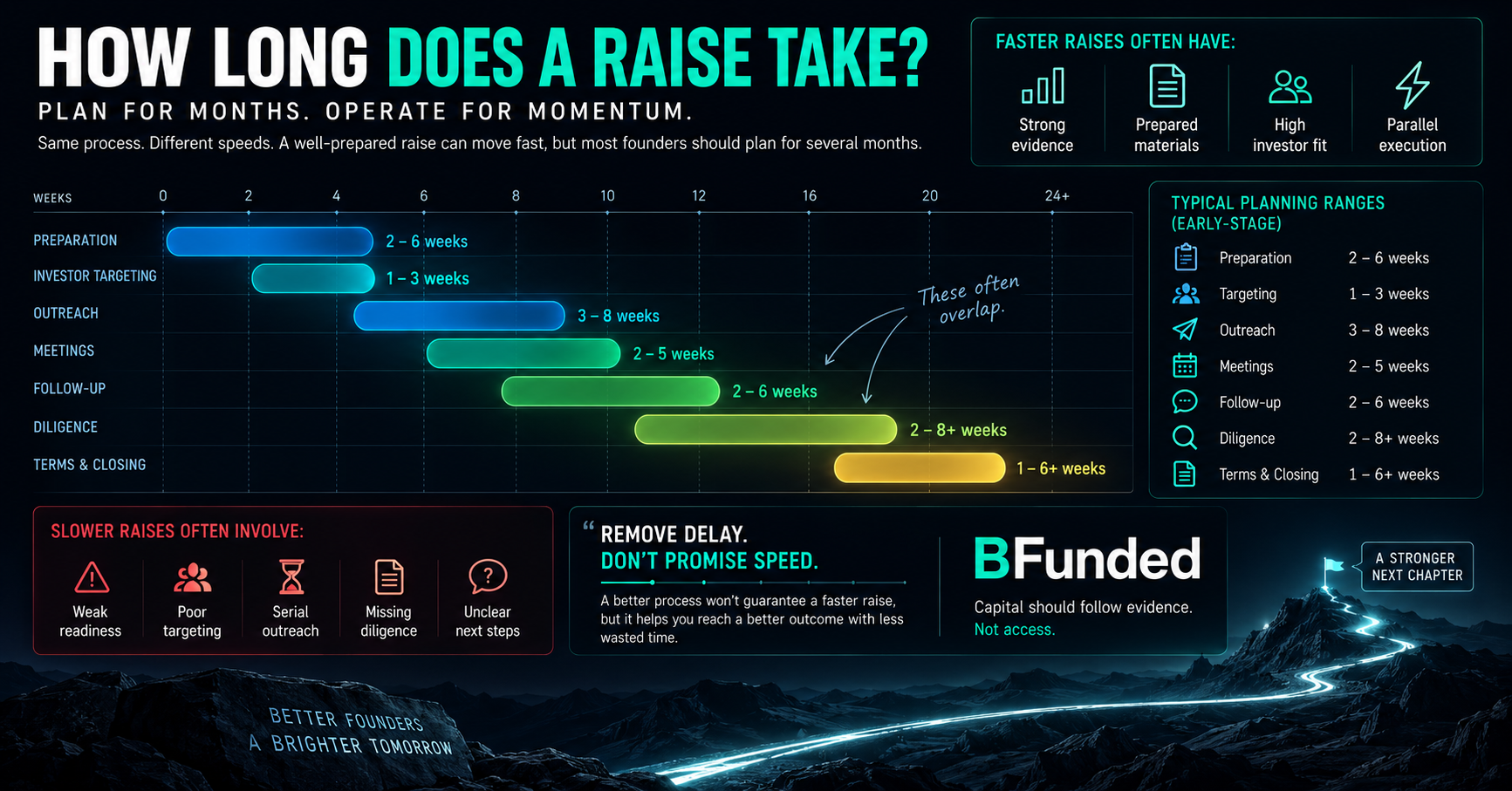
How Long Does Startup Fundraising Take? A Realistic Raise Timeline
How long does startup fundraising take? Learn what happens from preparation and investor outreach through meetings, diligence, terms, and closing — and what usually causes delays.
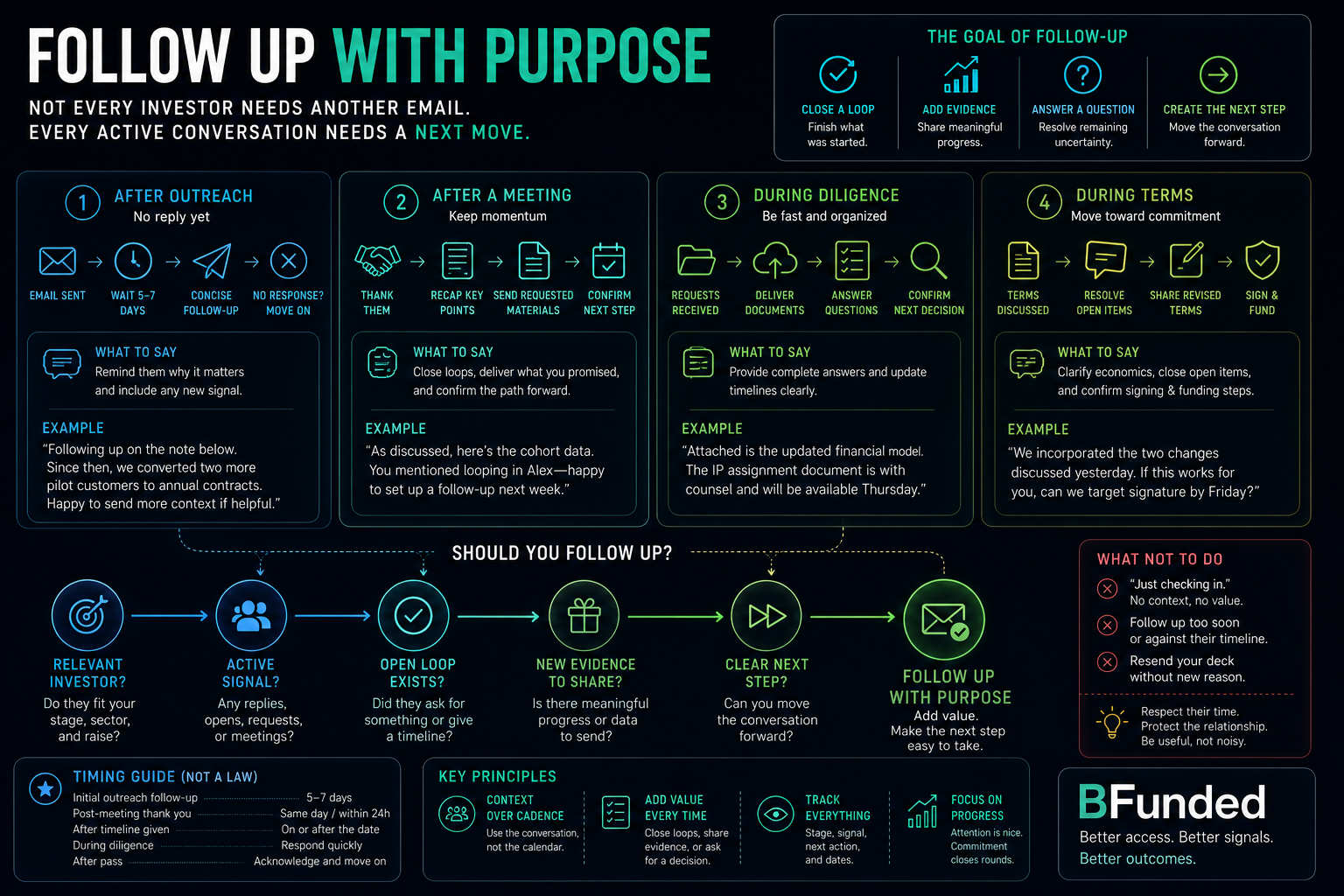
How to Follow Up With Investors Without Chasing Them Blind
Learn how to follow up with investors after outreach, meetings, diligence, and term discussions using context, investor signals, and clear next actions.
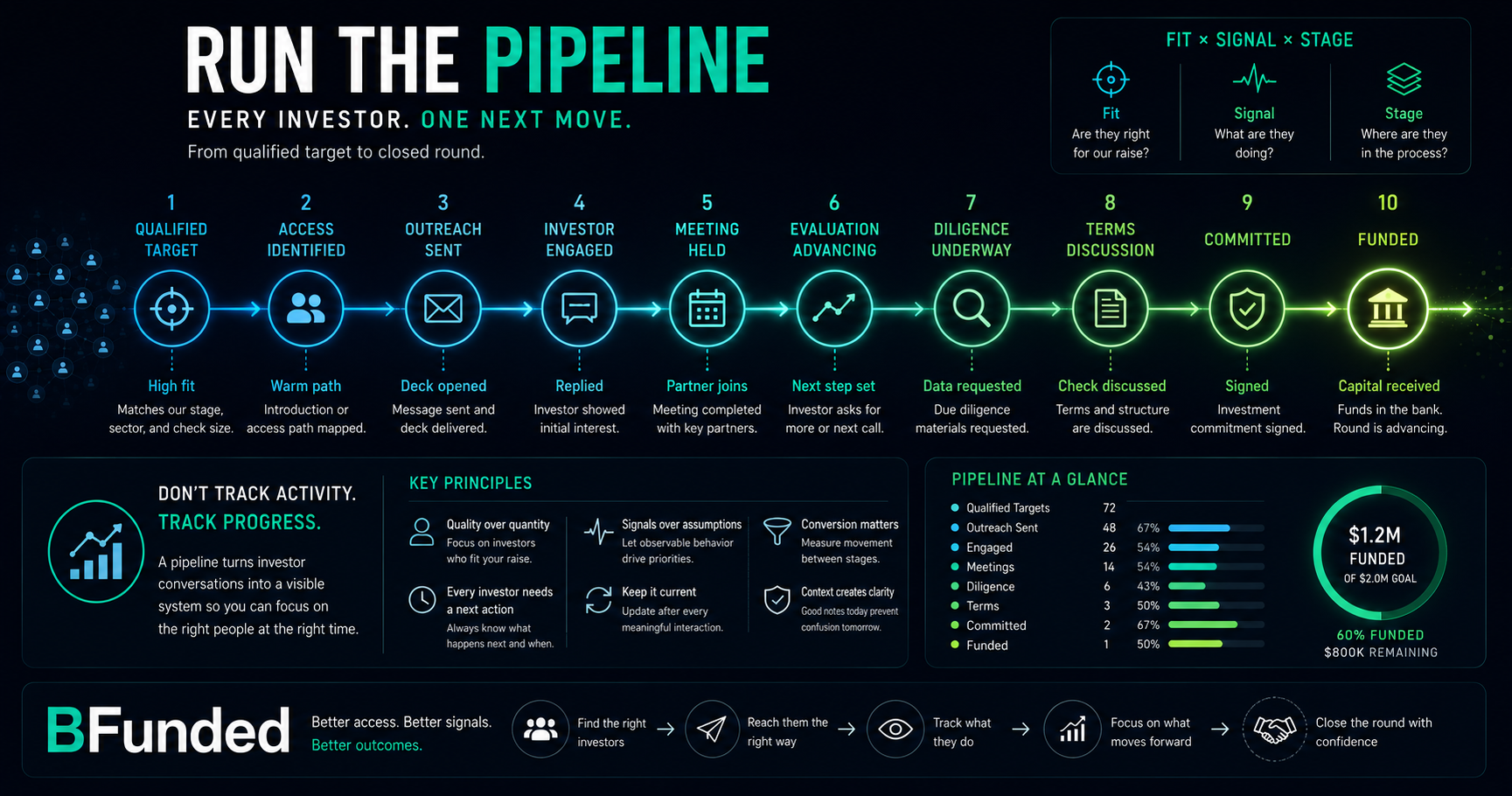
The Startup Fundraising Pipeline: From Investor Target to Closed Round
Learn how to build a startup fundraising pipeline that tracks qualified investors from outreach and meetings through diligence, terms, commitment, and funded capital.
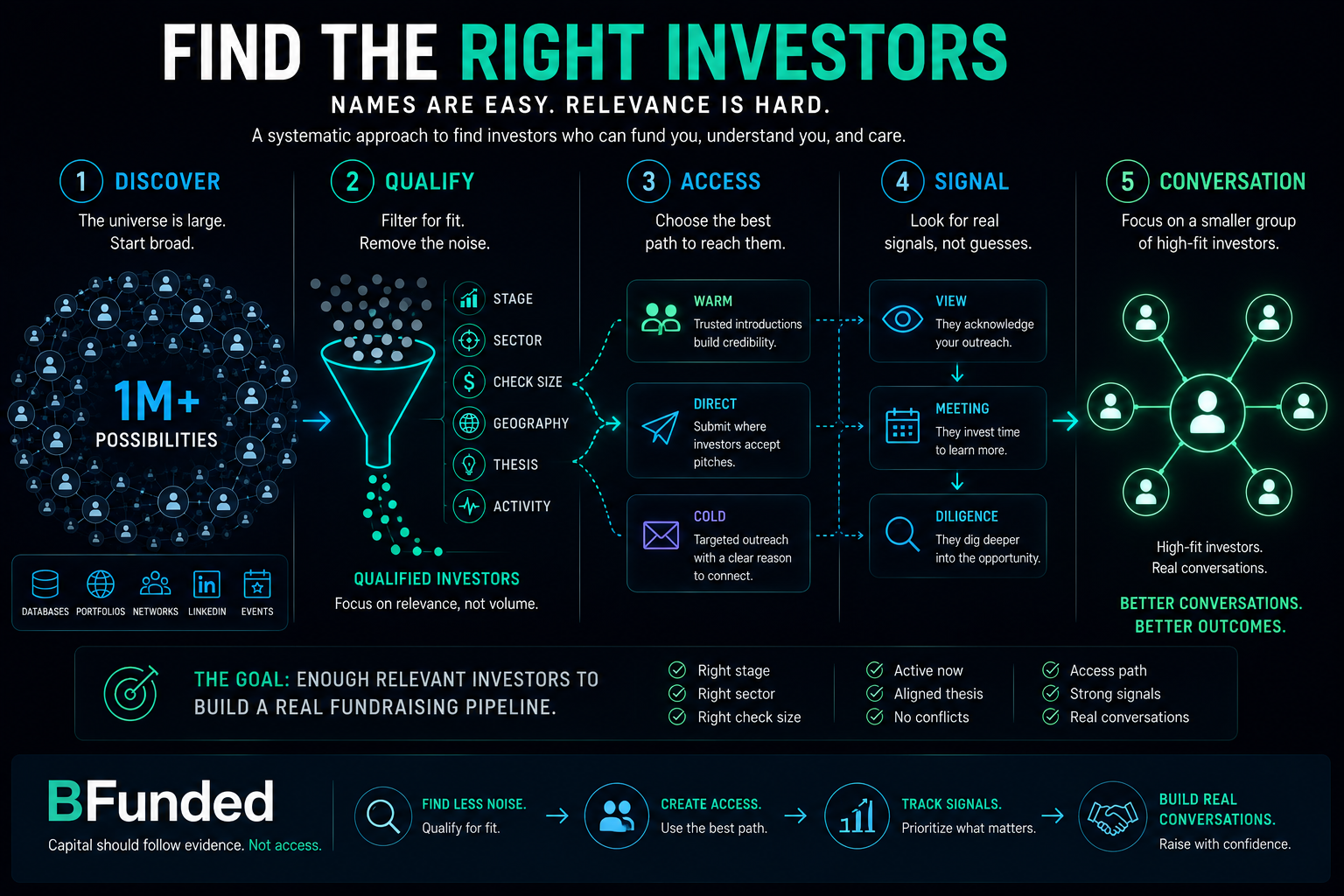
How to Find Investors for Your Startup Without Wasting Months on the Wrong Ones
Learn how to find investors for your startup by qualifying stage, sector, check size, activity, investor fit, access paths, and fundraising signals before outreach.
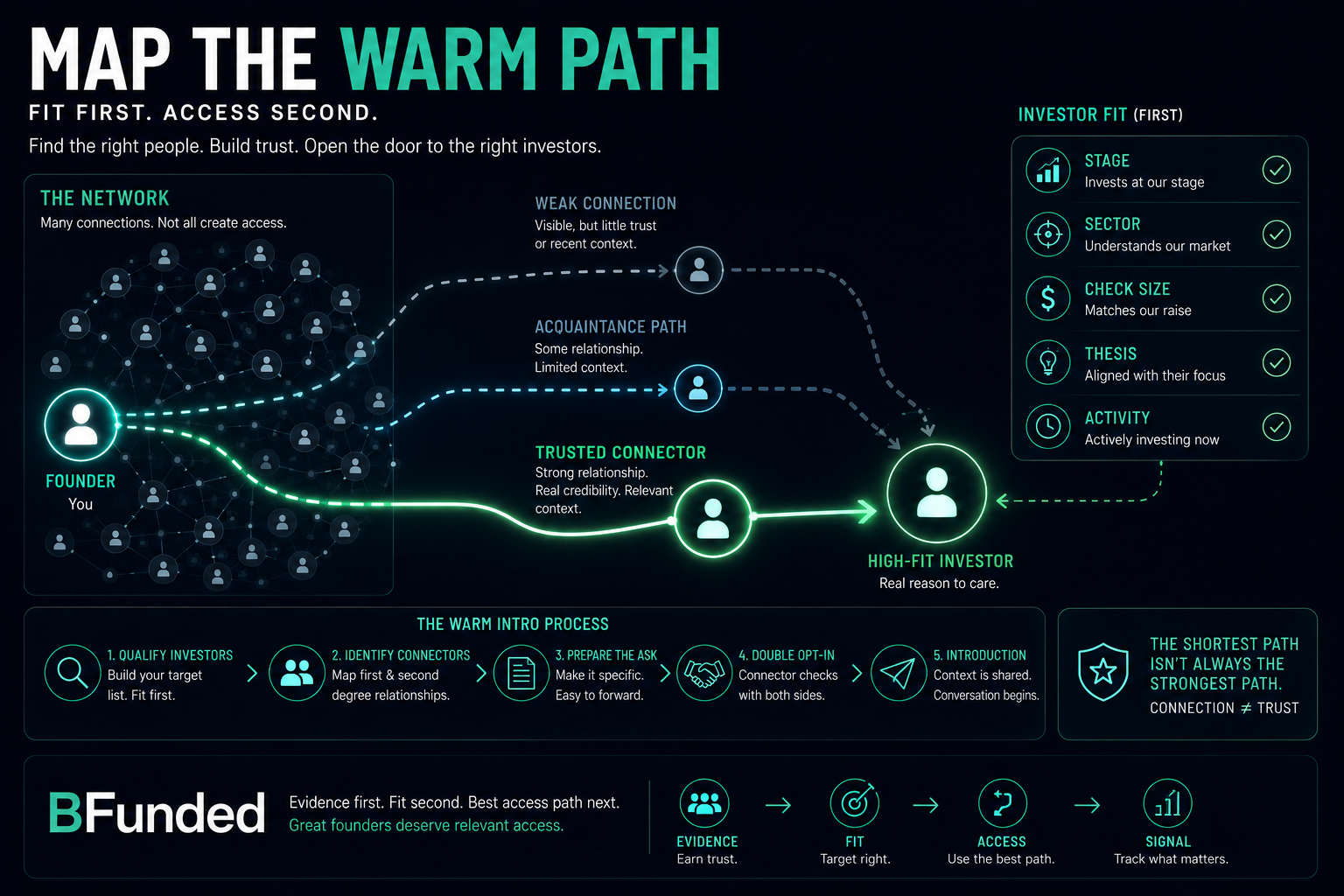
How to Find Warm Paths to the Right Startup Investors
Learn how to find warm paths to startup investors by qualifying investor fit first, mapping trusted connectors, creating forwardable intro requests, and tracking introductions through the raise.
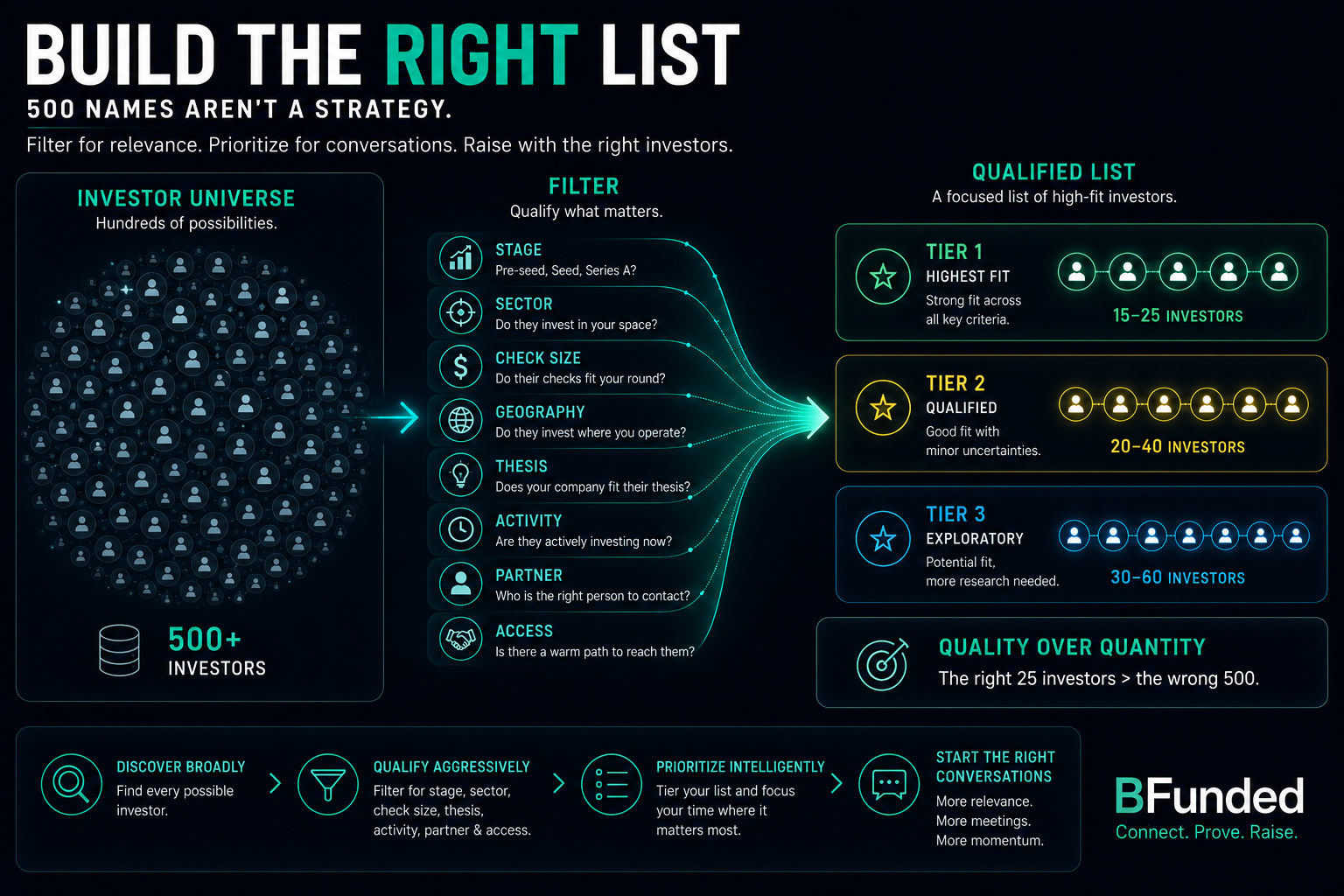
How to Build an Investor List That Actually Matches Your Raise
Learn how to build a startup investor list by filtering investors for stage, sector, check size, geography, thesis, activity, partner fit, and warm access.
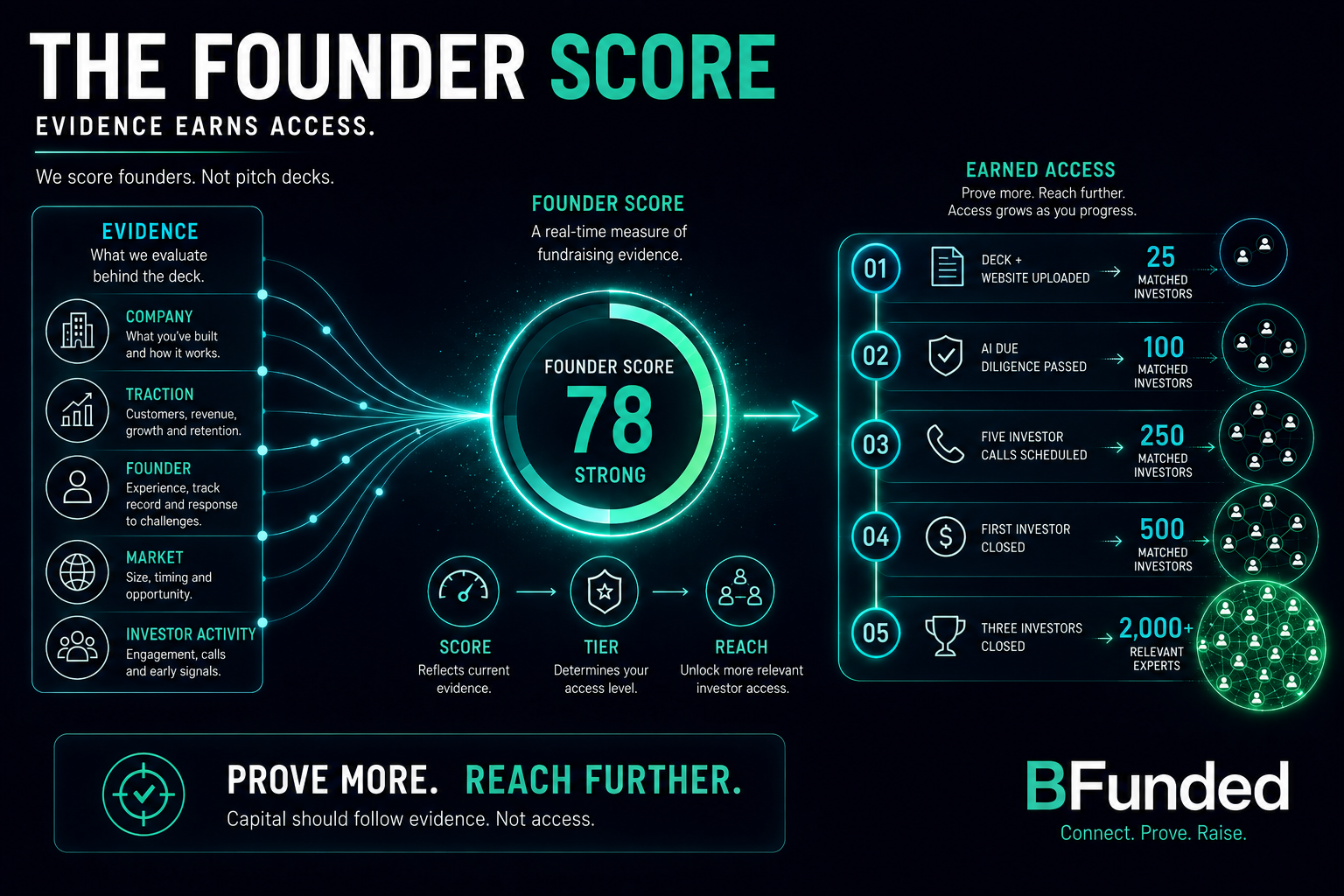
The BFunded Founder Score: What It Measures and Why It Matters
Learn how the BFunded Founder Score turns startup evidence into a fundraising signal, how the Five Tests unlock investor reach, and what the score does — and does not — mean.
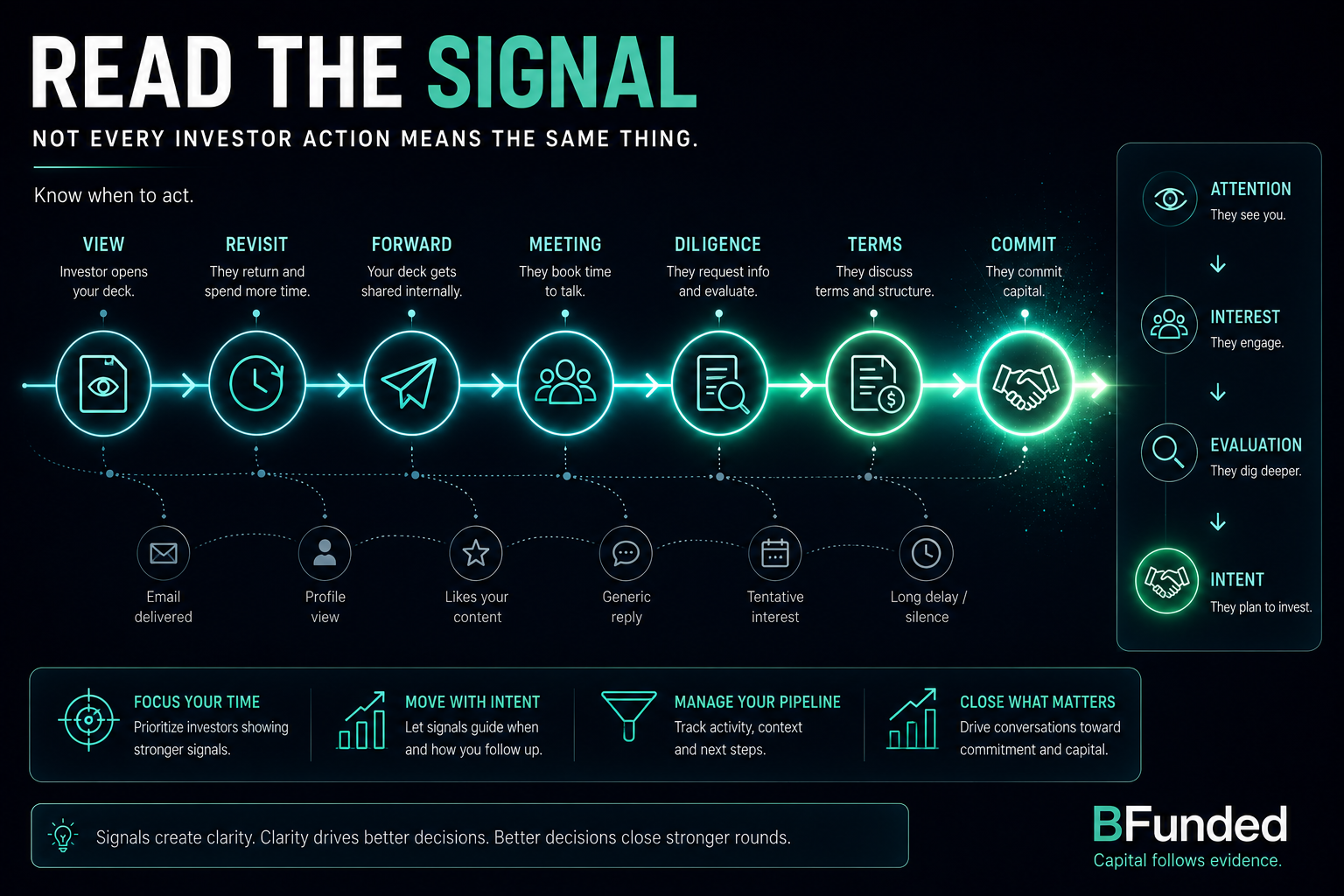
Investor Signals: How to Know When an Investor Is Actually Interested
Learn how to read investor signals during a startup raise, from pitch deck views and repeat engagement to meetings, diligence, terms, and actual commitments.
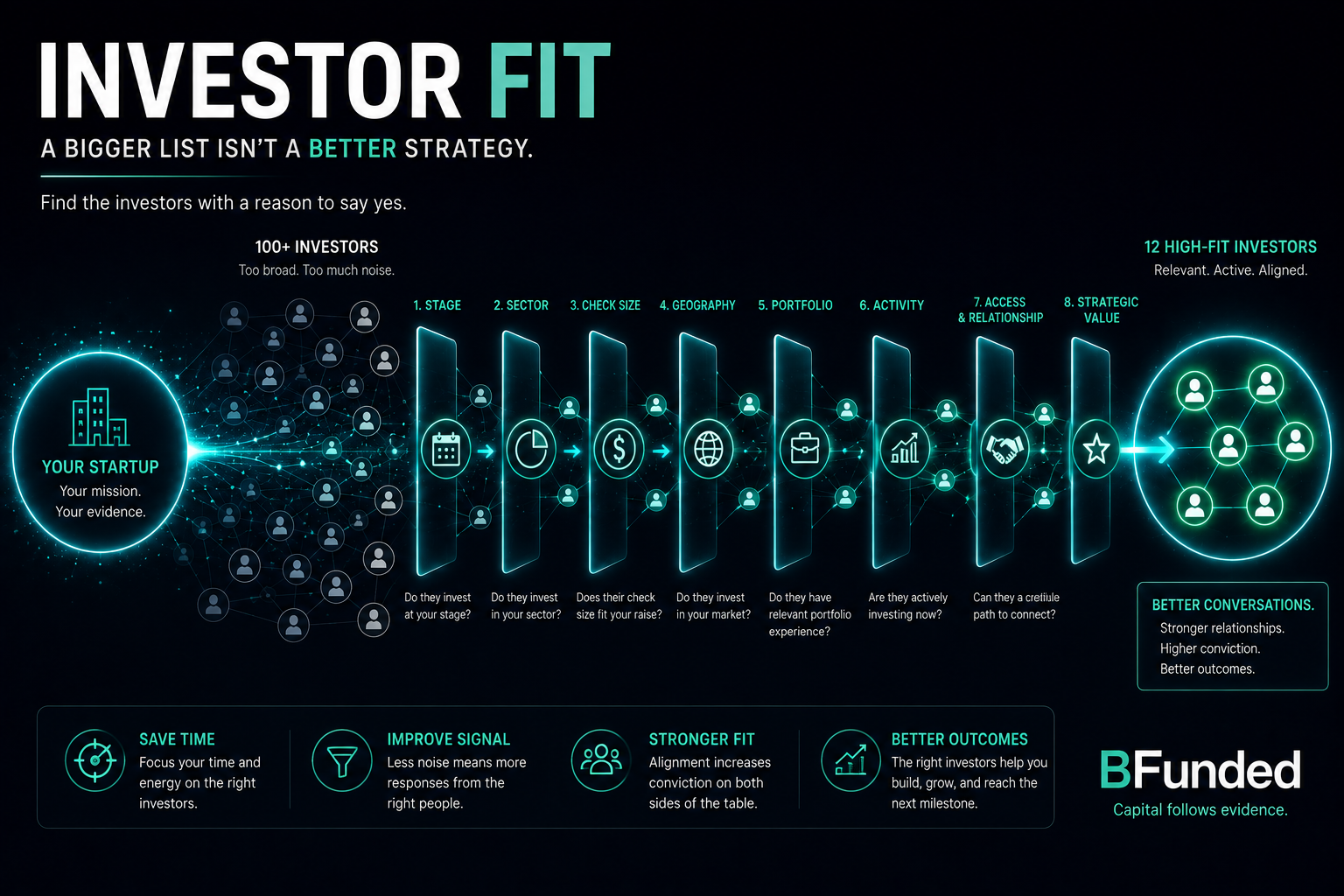
Investor Fit: How to Know Whether an Investor Actually Fits Your Startup
Investor fit goes beyond finding names. Learn how to evaluate startup investors by stage, sector, check size, thesis, portfolio, activity, access and long-term value.